Be honest with yourself: have you ever decided you didn't like a movie even before you ever saw it? And when you finally did see it, did you find yourself looking for reasons not to like it—maybe even reasons that didn't actually have much to do with the movie itself?
If you answered "Yes," then don't worry, you're in good company: literally everyone who has ever seen a movie has done this, and anyone who hasn't is either lying or doesn't really know themselves as well as they thought.
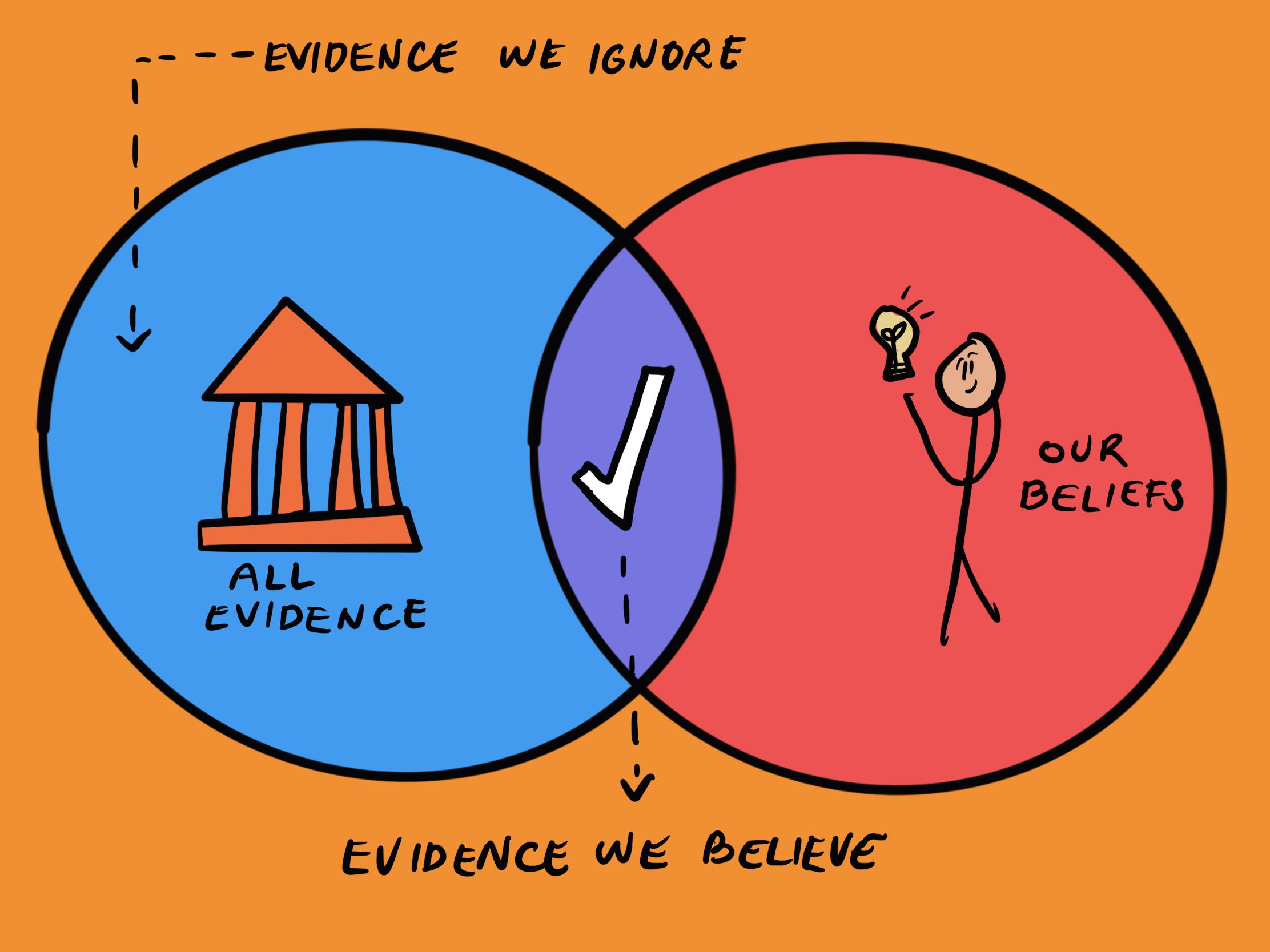 |
| An illustration of confirmation bias (check out this page at The Decision Lab for more info) |
Confirmation Bias
What you've experienced is something that all humans go through, which we call confirmation bias. A bias is a loaded prejudice—something we already assume about a thing before we see any actual evidence. When we actually do encounter the evidence, if we only look for what will help prove what we already believe we will find, that is confirmation bias in action.
Confirmation Bias and Fake News
Confirmation bias is a normal part of daily life. Sometimes it helps us to make quick decisions like, "should I have water or juice with breakfast?" or "Is it better to take this road or that road to get to school?" But it can also be dangerous, and lead us down rabbit holes we don't realize we're going down, especially on social media. App algorithms often try to engage us by logging what we click on and only showing us things we are already inclined to accept. Companies and individuals can also spam content that they know isn't true, just because they know they can rely on confirmation bias to get people to believe it simply if they see it. We call that fake news, and it's been getting harder and harder to use social media without being inundated by it.
Watch this video to learn how fake news and social media combine to prey on our instinctual reliance of confirmation bias.
Discuss it!
After watching the video, think for a minute and post a comment answering the following three questions. Bring your answers to class and be prepared for a discussion!
- Have you encountered fake news recently? Have you experienced or seen an example of confirmation bias recently?
- What are your thoughts on the video's message and evidence? Do you find the evidence it presents compelling, or unreliable? Why?
- Pick a claim from the video and see if you can confirm it or challenge it through an internet search. Post a link to your source in your comment, and we will group-check some of them for reliability in class.
Learn More
Find further resources and learn more about confirmation bias and fake news here:
- "Confirmation Bias & Information Literacy: Resources for Young People" (Programming Librarian website)
- "Why do we favor our existing beliefs?" (The Decision Lab)
- "Fake or Real? The all-new NewsWise headlines quiz!" (The Guardian)

No comments:
Post a Comment